Earlier this week I made a pretty simple Facebook post. I made a graphic and posted a reminder that Massachusetts hunters could purchase their antlerless deer permit on Wednesday September 16th at 9 am! As someone who still hunts primarily in Zone 2 where I might not pull a tag, this is an important day for me to get more tags to try to get more deer meat in the freezer to get my family through the year and into next season.
As tends to happen when you put anything remotely controversial on social media, the conversation got interesting. I didn’t even really think of this as being a controversial topic of conversation with all the OTHER things currently happening in the Bay State, but the good ol’ keyboard warriors were ready to go.
There were criticisms and questions about why Massachusetts has increased the number of antlerless permits in a number of their Wildlife Management Zones. There were concerns about whether we’re issuing too many doe tags. There was much criticism about deer herd and what all of these additional permits actually mean. And honestly I wanted to counter back and answer them with actual data – but I had some of the same questions and I struck out on my internet search trying to find the data to share. So instead of arguing about it on Facebook like many folks these days enjoy doing, I texted a few friends who I work with on various projects in the Massachusetts Bowhunters Association and in the Becoming and Outdoors Woman program in the F&W department and asked where I could get my hands on some concrete information. This led me to getting on the phone with Massachusetts’ Deer & Moose Project Leader, Martin Feehan.
Because here’s something I’ve learned through my work with my blog, the Massachusetts Bowhunters Association, American Daughters of Conservation, and now my podcast WildWoman Unfiltered – If I don’t know something, I’m going to ask.
Let’s be very clear – I don’t think we as hunters should be afraid to admit when we don’t know something and I don’t think non-hunters should be expected to understand the complexities of wildlife management without being given the opportunity to learn, either. We owe it to one another to educate ourselves.
More importantly, we owe it to the animals.
If we’re going to call ourselves conservationists, and stand up at public hearings and defend our rights as hunters and sportsmen and women, we can’t only learn the parts of wildlife management that support what we already believe. Sometimes we have to be willing to pick up the phone and ask a harder question. So that’s what I did. What I learned is that the conversation surrounding Massachusetts’ doe tags is considerably more complicated than the number printed on the permit allocation.
Let’s talk about deer.
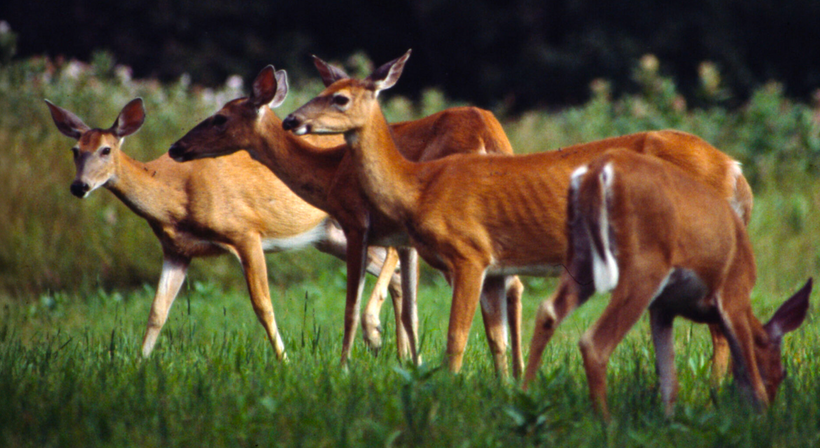
According to the information Feehan shared with me, some Massachusetts Wildlife Management Zones – specifically Zones 1, 3, 4S, 7 and 9—are currently carrying approximately 18 to 30 deer per square mile. The population density being used as an ideal benchmark is approximately 15 deer per square mile. Why does that matter? Because deer don’t exist in a vacuum – they live in an ecosystem. When deer densities get high enough, their browsing pressure can make it difficult for forests to regenerate. Young trees and other vegetation become food before they have an opportunity to grow. When the forest changes, the consequences don’t stop with the deer.
The plants change.
The habitat changes.
And the wildlife that depends on that habitat can be affected, too.
That was one of the biggest takeaways for me. Managing deer isn’t simply about managing deer. It’s about managing an ecosystem.
So why are there more antlerless permits?
This is where I thought the numbers got really interesting. There are several things happening simultaneously in Massachusetts. Like many other states, we’re seeing declining numbers of hunters. I am thrilled though to note that women are making up the largest growing demographic of increasing hunters – girl power! We’re also seeing decreases in permit purchases, as well as declining harvest numbers. But what I really found interesting is that we are seeing a change in what happens after someone is awarded an antlerless permit.
Historically, approximately 97–98% of hunters who were awarded a lottery permit would “pick it up.”
In other words: You applied for your antlerless tag before July 16th, you were awarded the permit, and then you went into your account and purchased it. But that number has changed. Feehan told me that since 2022, the pickup rate has been roughly 83%.
And there is an important distinction here: Being awarded a permit does not mean you’ve purchased the permit.
Massachusetts hunters have until December 31st to purchase an awarded antlerless permit. Some hunters may wait until they’re actually going to hunt, and others may ultimately decide they aren’t going to use the permit at all, so they don’t spend their 10$ and pick up the tag. MassWildlife has to account for the fact that not every awarded permit will ever become an active hunting opportunity – and that’s part of why allocations have increased.
Another large misconception happens here too, we have to remember: An awarded permit isn’t a deer. Read that again. A permit allocated by the state isn’t a deer harvested. A hunter applies, they are awarded a permit, they purchase that permit. Then they have to actually go hunting, find an antlerless deer, and then they have to successfully harvest it.
Only then does that permit equate to a harvested deer. And let’s not forget, if you work 6 days a week you probably don’t get a lot of time to hunt – Massachusetts is one of two states 2nd to Maine that still have an outward ban on Sunday hunting – and yes that in it of itself is a hot topic but that is not what I am writing about right now.
The numbers drop dramatically as you move through those steps. According to the figures Feehan shared with me, the fill rate for hunters who receive and purchase lottery-zone antlerless permits is only approximately 14–25%. And surplus permits? The fill rate is less than 5%. That means the number of permits on a spreadsheet and the number of does actually harvested are two very different things. And that distinction matters.
Here’s where history gets uncomfortable.
Feehan and I also talked about how we got here. Back in 2008 and 2009, there was a significant push from hunters specifically in western Massachusetts to reduce the number of antlerless permits being allocated. Hunters were telling the state they weren’t seeing deer.
If you’re a hunter who spends countless hours in the woods and isn’t seeing deer, it’s completely understandable that you would want management to respond to what you’re experiencing. However, I can tell you as someone who has hunted in Western Massachusetts my entire life – I have personally observed in my own hunting and scouting that there are deer everywhere; I can’t walk through the woods or down the trails without seeing scat and tracks. You have to be able to put the time and work in to find them though because we have a lot of ground they can cover. But let’s not sugarcoat this because we here in Massachusetts have a SIGNIFICANT problem. Wildlife populations don’t turn on a dime and hunter participation doesn’t either. No, Feehan used an analogy that stuck with me: he compared our current situation to the Titanic.
You can see the iceberg. You know you need to change direction. But the problem is that you’ve got a relatively small rudder trying to move a very large ship.
Today, Massachusetts is dealing with areas where deer densities as a result in the push in 08/09 that are higher than the desired level while simultaneously dealing with fewer hunters and fewer people actually filling antlerless permits. We have a management problem that has developed over years, and we can’t necessarily correct it overnight.
So what is Massachusetts doing about it?
This isn’t simply a story about handing out more doe tags and hoping hunters solve the problem. MassWildlife is trying multiple approaches to increase opportunity and, ultimately, harvest. Regardless of how you feel about the work that F&W is doing keep reading, because they really are trying to help with this really big, ongoing problem.
Youth hunting opportunities have been expanded, late-season hunting opportunities have been extended in some eastern zones, including into January (another recent, controversial topic) and the state has expanded to include the use of tools such as decoys. But there is another program I think deserves considerably more attention: Share the Harvest.
The concept is pretty simple. A hunter harvests a deer and brings the whole deer to an eligible, participating processor and then the processor turns that deer into meat that can be donated to people who need it. Then the hunter receives a replacement antlerless permit, which I had no idea was the case!
Think about what that accomplishes in regards to two problems – deer management AND hunger in our home state. You have a hunter participating in wildlife management, you have an animal harvested from a population that may be above the desired density, you have nutritious protein going to people who need it, and the hunter gets another opportunity to hunt.
That’s not just wildlife management. That’s community. I personally purchased surplus tags this morning in hopes of donating an entire deer this year to the share the harvest program, maybe 2 if I find the time and wherewithal to withstand the cold, December muzzleloader season.
But here’s the part I really want people to hear.
Whether you’re a hunter or you’ve never stepped foot in the woods with a weapon in your hands, you should care about understanding this. Hunters have a responsibility to understand the resource we’re participating in. I think that means understanding populations, the habitat, the harvest, and the “why” behind regulation changes. It also means being willing to question things we don’t understand instead of immediately deciding that the answer must be wrong.
I also think that non-hunters have a place in this conversation too. You don’t have to hunt to care about deer and you don’t have to agree with hunting to understand how wildlife populations are managed. More importantly, you don’t have to pick a side before you’re willing to learn. The best part? The education resources are FREE and readily available.
That’s something I have tried to carry into everything I do for the outdoors community, especially on my podcast. I don’t want my platform to be an echo chamber; I want it to be a place where we can have conversations, ask uncomfortable questions, admit when we don’t know something and listen to someone whose experience is different from our own. Because the more I learn about conservation, the more convinced I become that education is one of the most important tools we have.
If we’re not educating ourselves, we’re doing a disservice. We’re doing a disservice to our hunting community. We’re doing a disservice to the people who don’t hunt but want to understand what is happening around them. And ultimately we’re doing a disservice to the animals we’re claiming to care about.
So, are there too many doe tags?
After this conversation, I’m not sure that’s the question I would ask anymore.
I’d ask questions like – How many permits are actually being purchased? How many are actually being filled? What is the deer density in that particular Wildlife Management Zone? What is happening to the habitat? How many hunters are participating?
And perhaps most importantly: What happens when the number of hunters capable of changing a wildlife population continues to decline?
Those are much harder questions but they’re better questions. I think we’re capable of having better conversations about wildlife management when we’re willing to ask them. I’m still a hunter. I’m still going to have opinions. I am most certainly going to still question decisions. However, I’m also going to keep making phone calls to ask questions and to keep learning. Conservation isn’t about knowing everything, it’s about caring enough to learn.
When it comes to the animals, the forests and the wild places we say we want to preserve, I think the least we can do is educate ourselves before we decide what needs to be changed.
Sometimes the answer isn’t found printed on the tag; sometimes you have to look at the entire herd, the entire forest, the entire hunting population—and the entire ecosystem—to understand what’s really happening. Conservation starts with nothing more complicated than being willing to admit you don’t know – and asking someone who does.


Thank You for your insight. Very well written, well thought out and very well presented. Cheers
LikeLike